
Bomag – BC 1173
Bomag – BC 1173
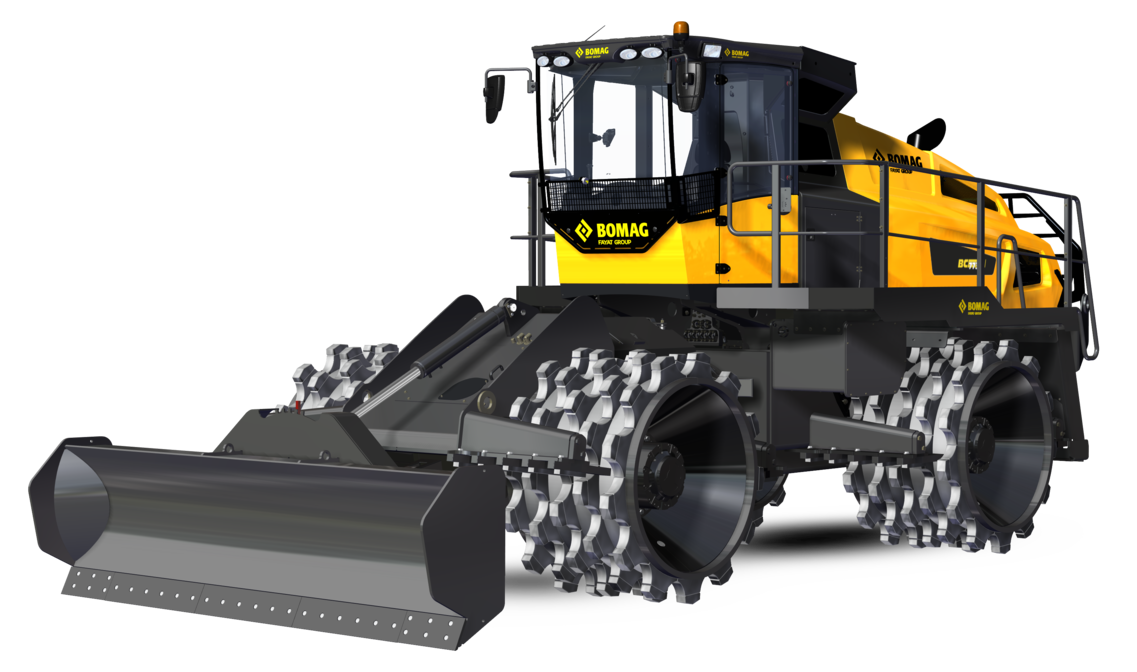
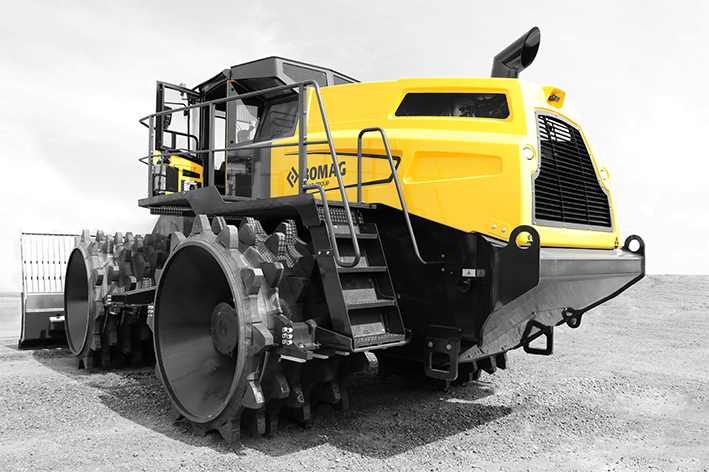
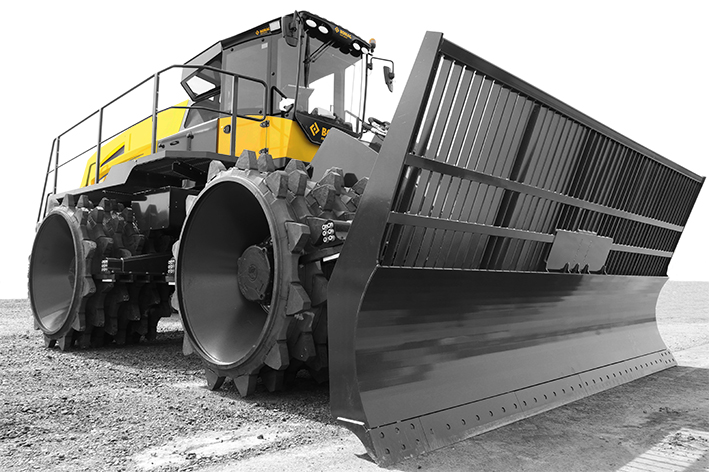
Starting with a minimum weight of 25 tonnes, ranging up to 55 tonnes and an engine output of almost 430kw, the waste compactors are among the heaviest and most powerful machines in the entire BOMAG product range. My first jobs as a junior designer at loew design was to optimize and detail single parts of the previous models of the current soil and waste compactors. Finally, our client decided to completely revise the existing models. The execution of all design-relevant components fell within my area of responsibility.
BRIEF
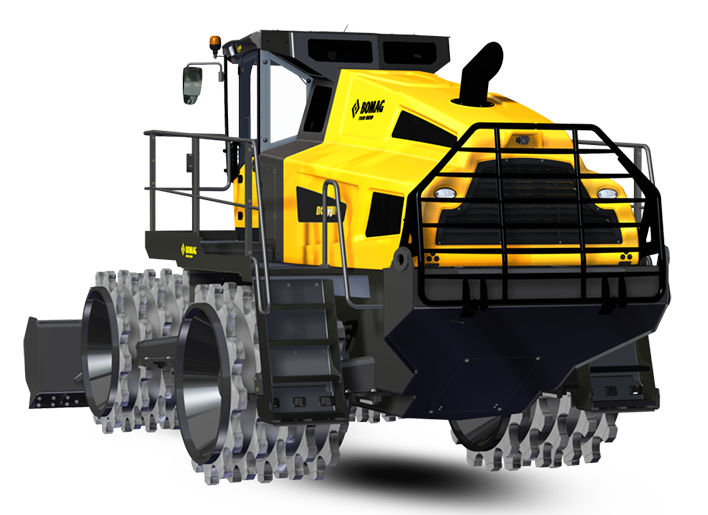
Without exception, all cladding elements of the previous landfill compactors were made of sheet metal and steel. This would change fundamentally. The bonnet, which is more than 4m long and almost 2m wide, was to be manufactured using the RIM process.
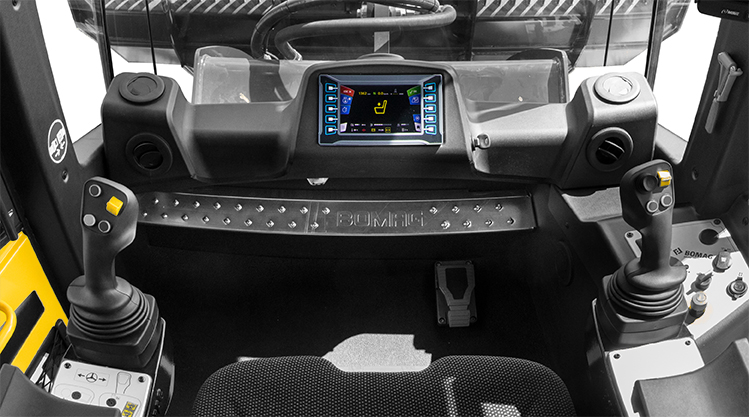
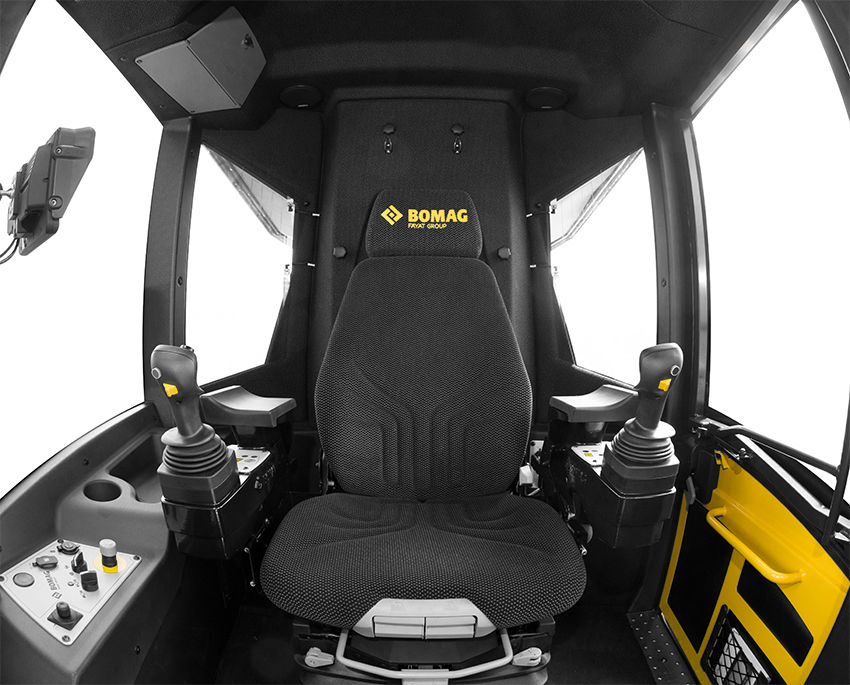
The cabin has been completely redesigned, and accordingly received a new interior and an additional impact protection on the outside. For the side worklight cladding, existing models were to be used, a front one had to be developed and designed separately.
The access and the working platform had to be adapted to the new design.
With the new series, many innovations have been integrated from a technical point of view. Of course, this should be expressed in terms of design. From an ergonomic point of view, an essential aspect of the design of the machine was to significantly improve the driver’s view to the front and especially to the rear.
IDEATION
Developing and designing a machine of this size and complexity is an enormous task and a lengthy process in which many people are involved. It takes place in different stages, some of them are several months apart and the development is costly.
I started my work on the machine on the basis of a CAD model that was largely technically designed. This means that dimensions such as engine compartment, cabin size, frame sizes, sizes and position of air inlets and outlets, opening angles, railing heights, positions of maintenance flaps, headlights to be used, visual beam, functions and arrangement of the cockpit, material thicknesses as well as the specifications of the style guide to the current design DNA, defined clear specifications to which the design had to be oriented.
Depending on the cost and time frame, as well as the complexity of a project, it makes sense to check the feasibility of drawing ideas in CAD as quickly as possible. In the case of the landfill compactor, a successful design of the bonnet was quickly transferred to CAD and further developed there. The situation was similar with all other elements of the machine to be designed.
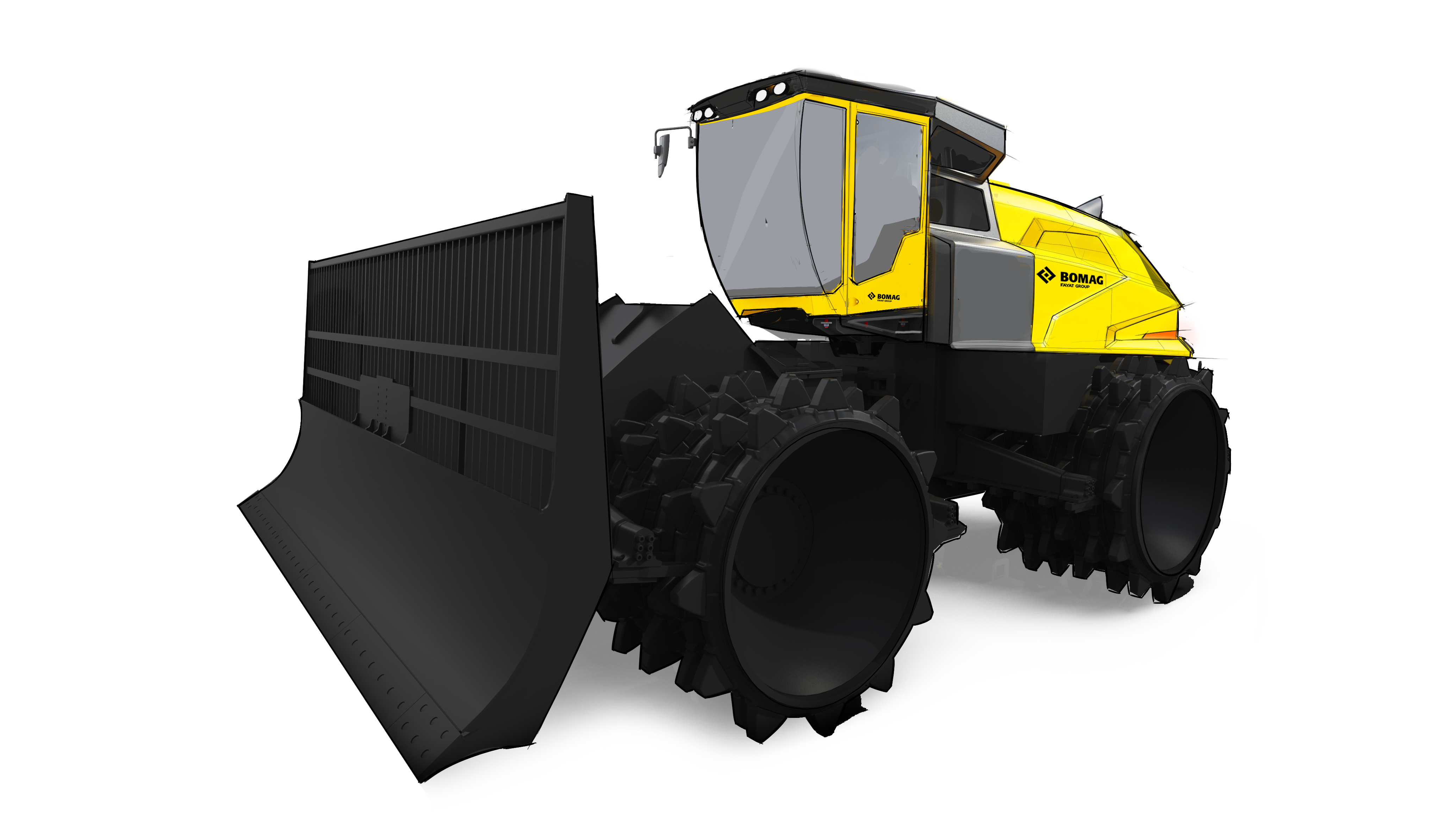
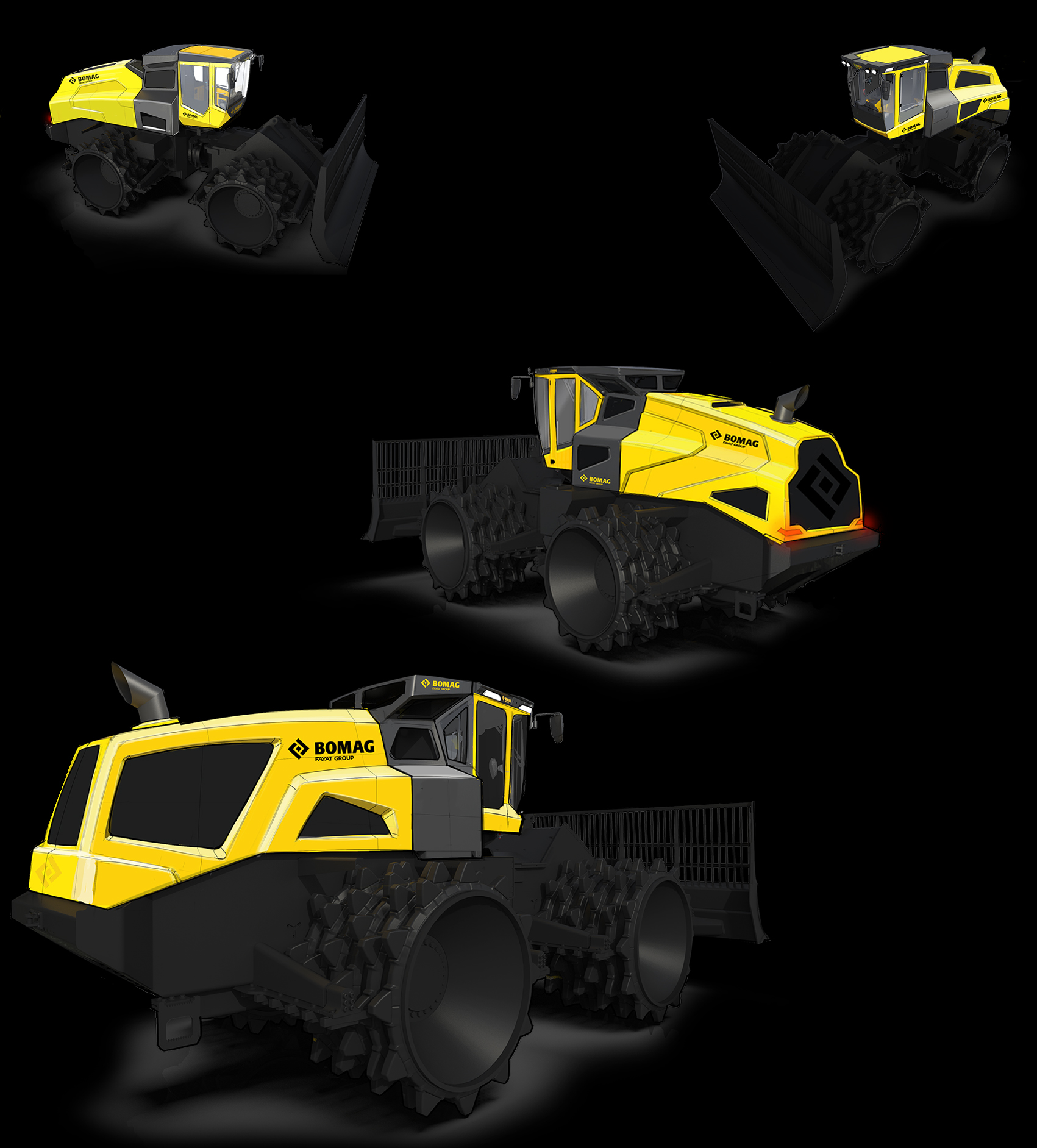
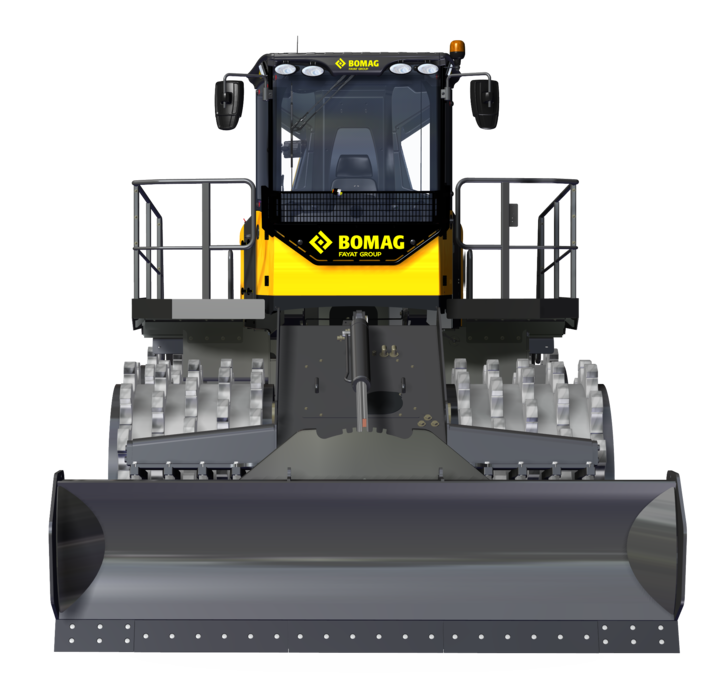
The goal is to generate CAD design data that is as close to the final construction data as possible.
3D MODELING
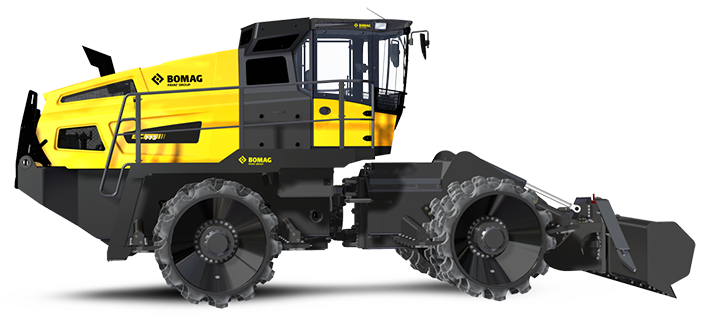
Based on an idea sketch, the final design evolves from a simple solid to a highly complex shape with curved surfaces, various radii and dynamic chamfers . Along this way, adjustments must be made again and again and sometimes whole design ideas have to be thrown out, until the final design meets all functional and aesthetic requirements.
ADDITONAL PARTS
After the development of the main parts like the bonnet and the cabin, it was time to work out individual attachments. In conjunction with the crash protection for the cab, the front lamp console above the cab was worked out relatively late, followed by the working platform and the access. The work on the impact protection of the rear and the integration of the rear view camera into the bonnet finally closed the project.
FINAL DESIGN
Including interior elements like the air-conditioning with the integrated display, as well as the side storage and the arm console, the project took more then two years to complete. While other machines have been revised both from the technical side and in terms of design, the trash compactor still exists almost unchanged already in its second generation.

Phone
(+49) 160-5189458